
Recovery isn’t always a straight path. Even after the most intense withdrawal symptoms have passed, some people notice lingering challenges — like mood swings, trouble sleeping, or feeling foggy — for weeks or even months.
These symptoms can understandably be discouraging, especially when they hit unexpectedly. This stage of recovery can feel confusing, and even make someone question their progress.
Understanding why it happens and what you can do is a key step in staying on track. In this blog post, we’ll answer every question you have about post-acute withdrawal syndrome (PAWS) and discuss why medical detox is the best way to get through it.
Key Takeaways:
- PAWS is a set of withdrawal symptoms that linger for weeks to months after the acute detox phase, coming and going in waves.
- It’s most common after dependence on alcohol, opioids, and benzodiazepines — substances that alter the brain’s reward and stress systems.
- Common symptoms include mood swings, cravings, brain fog, sleep problems, emotional dysregulation, and social withdrawal.
- PAWS is a normal part of healing, not a sign of failure — and recognizing it as such makes episodes easier to ride out.
- Having support and a plan in place lowers the relapse risk that PAWS symptoms can create.
What is PAWS?
Post-acute withdrawal syndrome (PAWS) is a set of withdrawal symptoms that can linger after the initial detox period. Unlike the early phase of withdrawal, PAWS tends to come and go over a longer stretch of time and may affect how a person feels and functions day to day.
Which Substances Trigger PAWS?
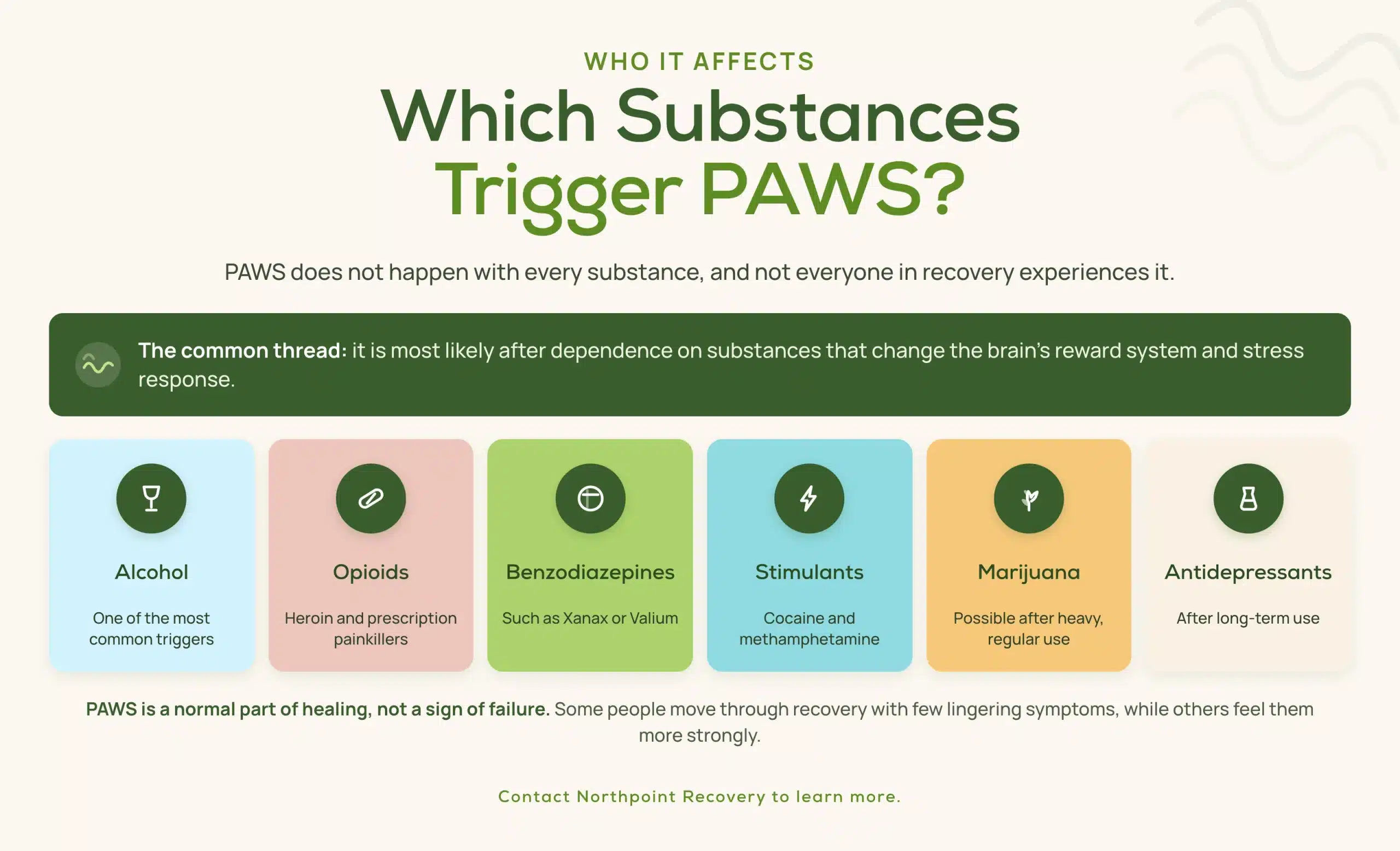
PAWS doesn’t happen with every substance, but it’s more common with those that cause changes in the brain’s reward system and stress response.
Here are some of the substances known to trigger PAWS:
- Alcohol
- Opioids (like heroin or prescription painkillers)
- Benzodiazepines (such as Xanax or Valium)
- Stimulants (like cocaine or methamphetamine)
- Marijuana
- Antidepressants (after long-term use)
What Are the Post-Acute Withdrawal Symptoms?
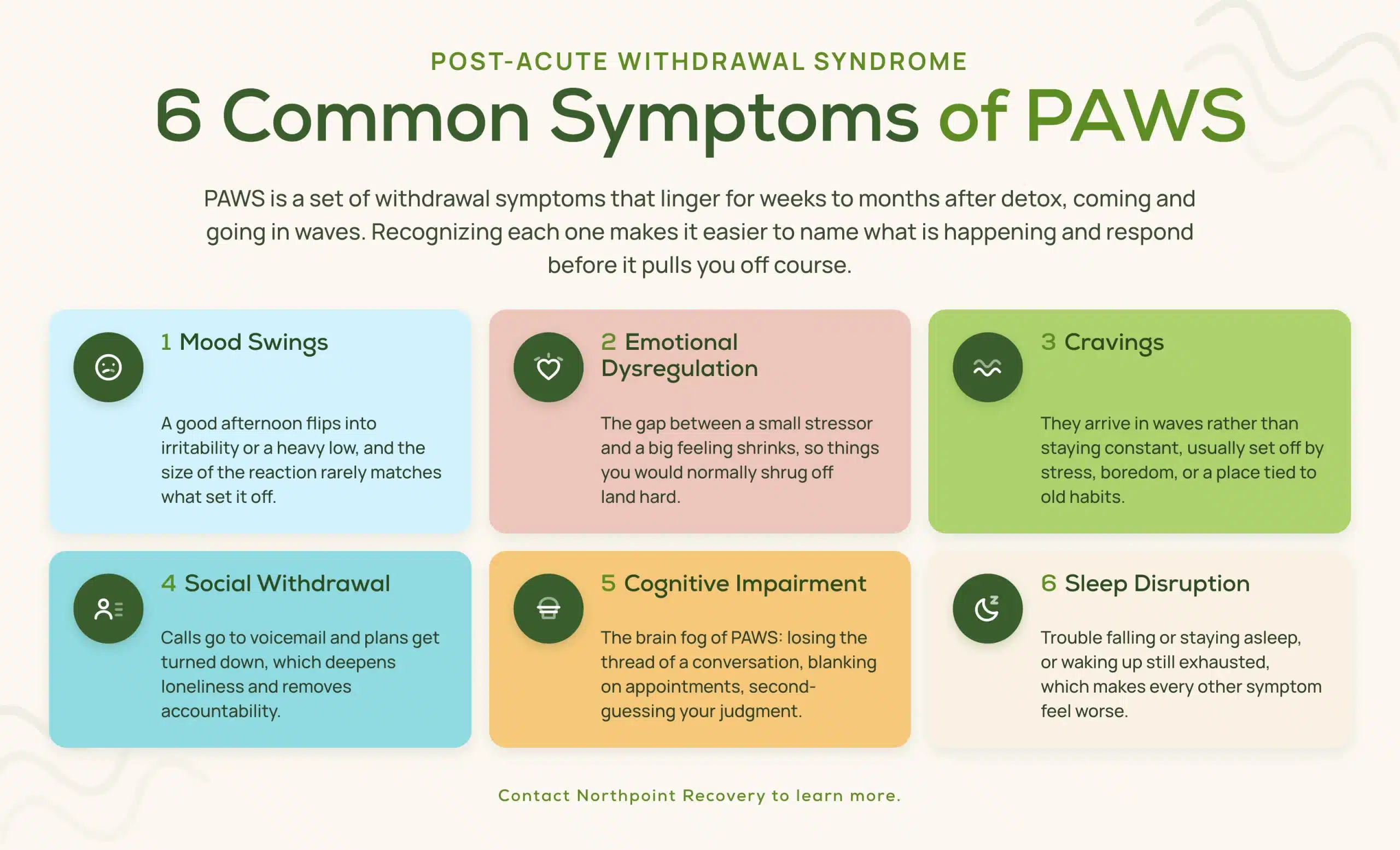
The most common PAWS symptoms are mood swings, emotional dysregulation, cravings, social withdrawal, cognitive impairment, and sleep problems. SAMHSA’s protracted withdrawal advisory groups these lingering effects together as the quieter phase that follows acute detox — the point where many people expect to feel better and instead hit an unexpected wall. Learning to recognize each one day to day makes it easier to name what’s happening and respond before it pulls you off course.
1. Mood Swings
Mood swings are the symptom most people notice first. Your emotional baseline stops holding steady, so a good afternoon can flip into irritability or a heavy low without much warning — and the size of the reaction rarely matches whatever set it off.
In practice, that can look like snapping at someone over a misplaced set of keys, sinking into sadness you can’t trace to anything, or riding a burst of energy that drops out from under you an hour later. The swings aren’t a character flaw. They’re your brain’s mood chemistry recalibrating after months or years of being pushed in one direction.
2. Emotional Dysregulation
When those swings hit often enough, staying in control of your reactions gets harder — that’s emotional dysregulation. The gap between a small stressor and a big feeling shrinks, so things you’d normally shrug off can land like a gut punch.
You might get thrown by a bit of criticism that wouldn’t have fazed you before, feel so flooded mid-argument that you can’t find your words, or watch a minor inconvenience tip into full frustration. None of it means you’re back at square one. It means the brakes on your emotional system are still coming back online.
3. Cravings
Cravings in PAWS come in waves rather than staying constant, and they’re usually set off by stress, boredom, or a place tied to old habits. This is the reward system at work: addiction changes the brain’s reward system, and repeated use dampens that circuit until everyday pleasures feel flat and the brain keeps steering you back toward the substance.
A craving might show up as a sudden, sharp urge when you’re overwhelmed, a habit of romanticizing past use while conveniently forgetting the fallout, or a pull so strong it crowds out whatever else you’re trying to focus on. They aren’t a promise of relapse — they’re a sign your brain is still healing from addiction, and they pass. Recognizing them for what they are is what lets you ride them out instead of acting on them.
4. Social Withdrawal
As the emotional load builds, pulling away from people can feel like the easiest option — and that’s social withdrawal. Isolating might seem protective in the moment, but it usually deepens loneliness and quietly removes the accountability that keeps recovery on track.
It tends to creep in: letting calls go to voicemail, turning down plans to sidestep anything that feels like effort, stringing together days mostly alone even when part of you is craving connection. The instinct to retreat is understandable, but it’s usually the moment reaching out matters most.
5. Cognitive Impairment
Cognitive impairment — the “brain fog” of PAWS — makes it hard to think clearly, hold onto details, or trust your own judgment. It can be one of the more unsettling symptoms, because it chips at your confidence in handling ordinary responsibilities.
You might lose the thread of a conversation halfway through, blank on appointments or errands that used to be automatic, or make a quick call you end up regretting. It’s frustrating, but it’s temporary — the fog lifts as your brain keeps rebuilding.
6. Sleep Disruption
Sleep disruption is one of the most stubborn PAWS symptoms, and often one of the last to fade. Trouble falling asleep, staying asleep, or waking up still exhausted drains the energy you need to manage everything else — which is part of why poor sleep can make every other symptom feel worse.
That might mean lying awake for hours even though you’re wiped out, surfacing several times a night or snapping awake before dawn, or dragging through the day irritable and foggy after a full night in bed. Protecting your sleep isn’t a luxury in recovery. It’s one of the most practical things you can do to steady everything else.
How Long Do PAWS Symptoms Last?
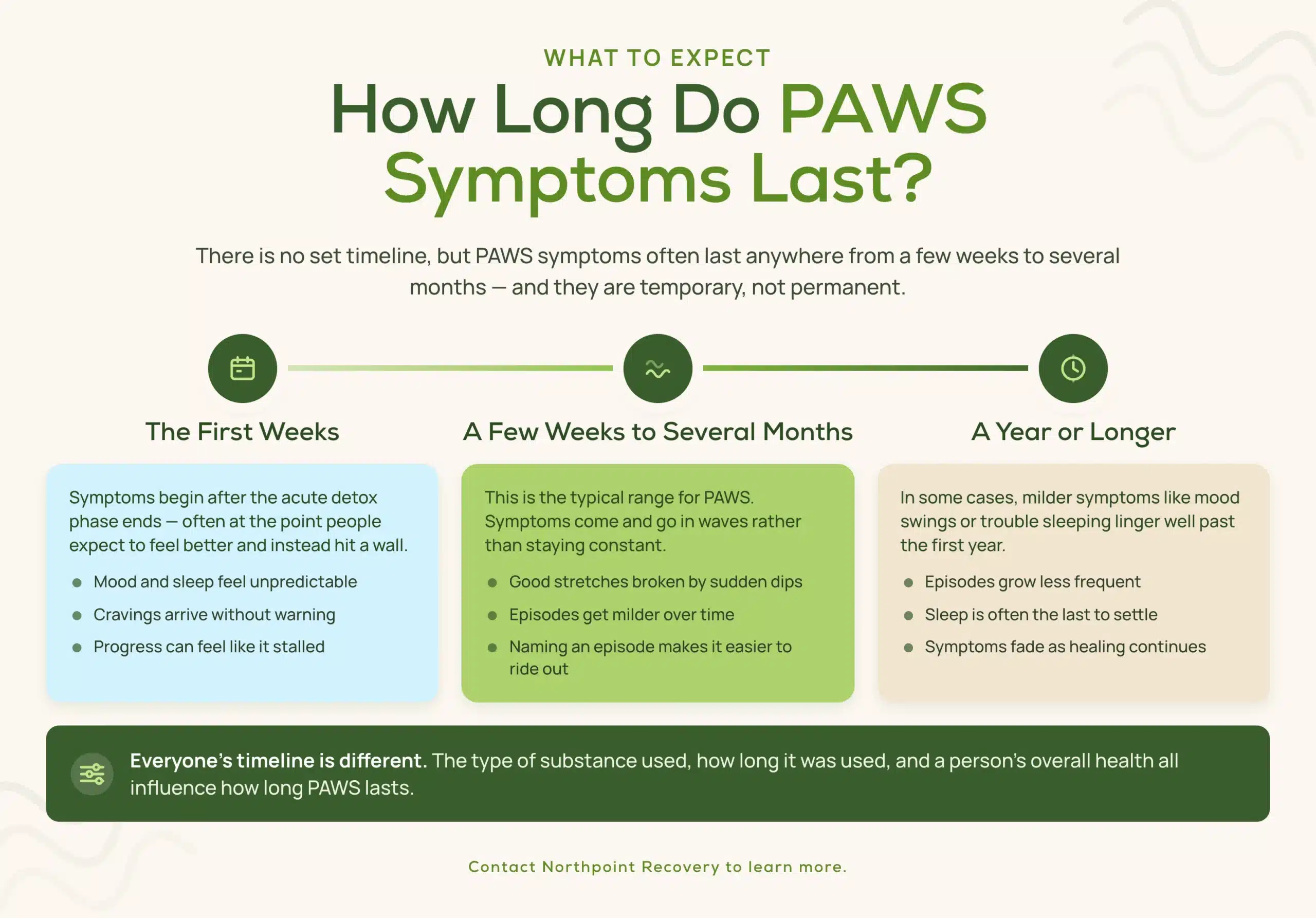
There’s no set timeline for how long post-acute withdrawal symptoms stick around. That said, PAWS symptoms often last anywhere from a few weeks to several months.
Everyone’s recovery journey is unique, and several factors like the type of substance used, length of use, and overall health can influence how long it lasts.
In some cases, milder symptoms like mood swings or trouble sleeping may linger for a year or longer, coming and going in waves. Recognizing this as part of the healing process can make staying patient and committed to recovery easier.
Benefits of Medical Detox When Treating PAWS
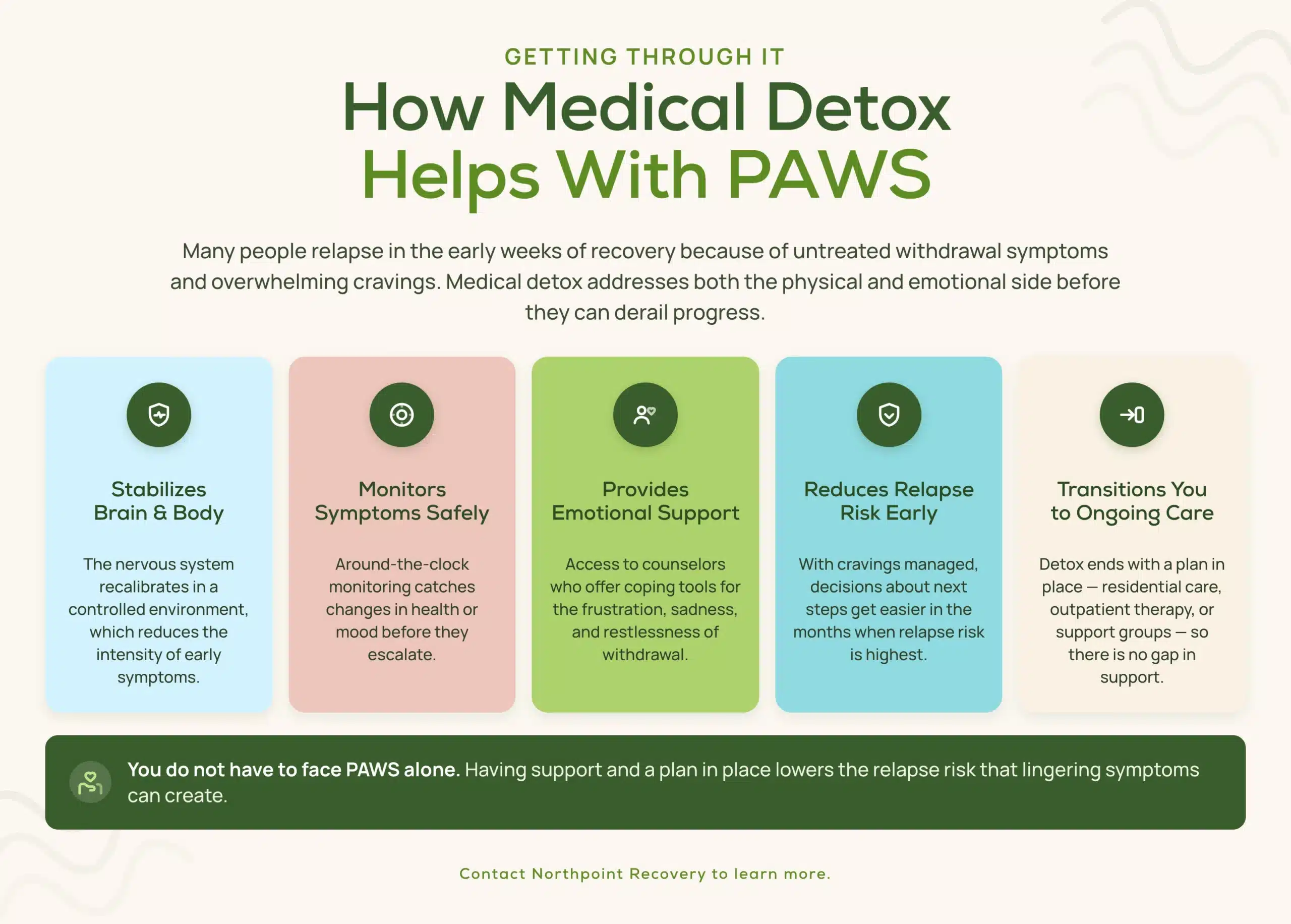
Medical detox creates a safe starting point for recovery. It’s a place to get through withdrawal as well as a source of comfort and guidance that makes the path ahead feel less overwhelming. With the right support early on, you can stay steady as your mind and body begin to heal. Here’s how:
Stabilizes the Brain and Body Early On
Stopping substance use can leave the brain struggling to find its balance. Mood, sleep, and stress levels may feel unpredictable in these first days and weeks. In medical detox, professionals can provide targeted care to help ease these challenges.
This support helps by:
- Allowing the nervous system to begin recalibrating in a controlled environment
- Reducing the intensity of early symptoms
- Helping you feel physically and emotionally stronger as you prepare for the next phase of recovery
The steadier you feel during this stage, the more energy and focus you can bring to long-term healing and accomplishing your goals in recovery.
Monitors and Manages Symptoms Safely
Post-acute withdrawal symptoms can shift from mild to overwhelming with little warning. Medical detox provides around-the-clock monitoring so any changes in your health or mood are addressed quickly.
This proactive care helps by:
- Minimizing the risk of medical complications, which keeps symptoms from escalating
- Reassuring you that help is always within reach, which can ease anxiety during a very vulnerable time
- Feeling supported in a way that makes it easier to stay committed to recovery
Provides Emotional Support
The emotional ups and downs of withdrawal can take people by surprise. Feelings of frustration, sadness, or restlessness are common and can make it tempting to give up. Medical detox programs often include access to counselors or mental health professionals who understand what you’re going through.
These professionals offer guidance and coping tools to help you manage difficult emotions. Emotional support at this stage builds confidence and helps you develop healthier responses to stress.
Over time, these skills can reduce the likelihood of relapse and support a more balanced recovery journey.
Reduces Relapse Risk Early
Many people relapse during the early weeks of recovery because of untreated withdrawal symptoms and overwhelming cravings. Medical detox lowers this risk by addressing both the physical and emotional aspects of withdrawal before they can derail your progress.
With cravings managed and symptoms under control, you’re better able to make clear-headed decisions about your next steps. This strong foundation gives you a greater chance of maintaining sobriety in the critical early months when the risk of relapse is highest.
Smooth Transition to Ongoing Care
Recovery doesn’t end when detox is over. A key benefit of medical detox is that it helps you transition into ongoing treatment with a clear plan in place. Whether it’s residential care, outpatient therapy, or support groups, this continuity of care keeps you connected to the resources you need.
Having a relapse prevention plan as a roadmap for the next stage of recovery reduces uncertainty and prevents gaps in support. It allows you to build on the progress made during detox and continue moving forward with confidence. This long-term support system is what makes lasting recovery possible.
Frequently Asked Questions About PAWS
1. Is PAWS permanent?
No, PAWS isn’t permanent. Its symptoms are temporary, though they can come and go in waves for several months — and in some cases up to a year or more. As your brain and body keep healing, the episodes usually grow milder and less frequent until they fade.
2. Does everyone in recovery get PAWS?
No, not everyone experiences PAWS. It’s most common after dependence on substances that alter the brain’s reward and stress systems, such as alcohol, opioids, and benzodiazepines. Some people move through recovery with few lingering symptoms, while others feel them more strongly.
3. What does a PAWS episode feel like?
A PAWS episode often feels like a sudden dip after a stretch of feeling fine. You might notice mood swings, brain fog, irritability, low energy, trouble sleeping, or a wave of cravings that seems to come out of nowhere. These episodes tend to pass, then return unpredictably over time.
4. How can you manage PAWS at home?
You can ease PAWS at home by protecting your sleep, moving your body, eating regular balanced meals, and leaning on your support network. Tracking your triggers, practicing stress-management skills, and staying connected to therapy or a support group all help you ride out episodes without losing progress. If symptoms feel overwhelming, reach out to a treatment professional.
5. Can PAWS lead to relapse?
Yes, PAWS can raise the risk of relapse. The lingering symptoms are discouraging, and cravings that arrive in waves can be hard to sit with — especially without support. Recognizing PAWS as a normal part of healing, and having a plan to manage it, lowers that risk considerably.
6. Is PAWS a recognized medical condition?
PAWS is a widely recognized set of symptoms in addiction medicine, sometimes called protracted withdrawal. Organizations like SAMHSA describe these longer-lasting effects, though PAWS isn’t always listed as a separate formal diagnosis. Clinicians treat it as a real and expected part of the recovery process.
Start Strong in Recovery With Medical Detox
Post-acute withdrawal symptoms can make recovery feel harder than you expected, but you don’t have to face them alone. A medical detox program gives you the support, care, and tools you need to get through withdrawal safely and prepare for what comes next.
With the right help, this chapter can be the one that lasts. You’ll have a team by your side to ease the challenges of PAWS and guide you toward lasting recovery.
A stronger, steadier recovery starts here. Contact us today to learn more about our personalized addiction treatment programs.